
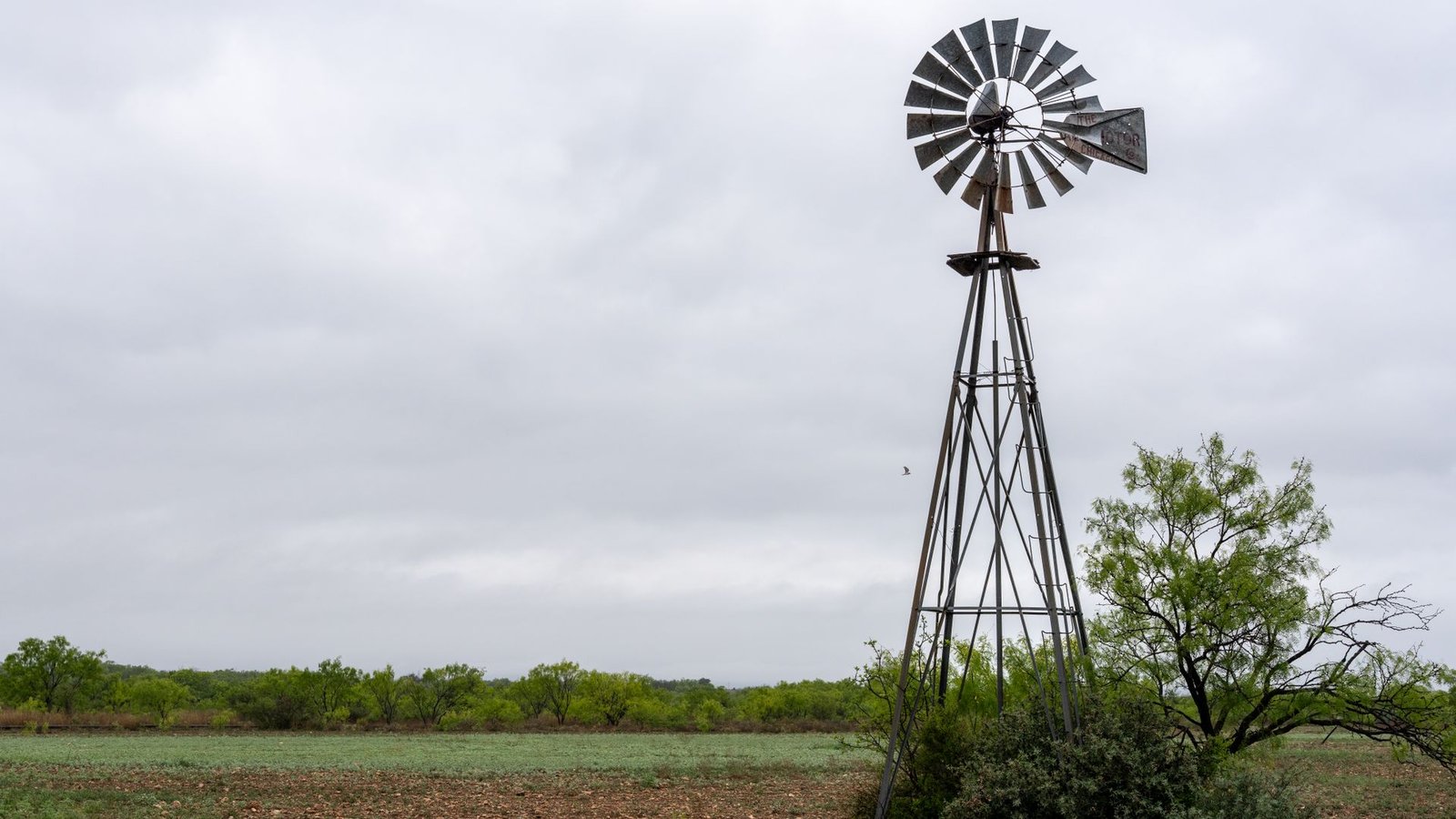
Quick answer: To sell inherited family land in Texas when several heirs own it, first settle title through probate or a recorded affidavit of heirship, then get every co-owner to agree and sign. If the family can't agree, Texas heirs' property law gives the other heirs a chance to buy out any heir who asks the court for a sale.
Thanksgiving week is when a lot of families finally talk about the land. Everyone is home, someone asks what happens to Mom and Dad's place, and it turns out four or five siblings now own the same 60 acres together. I'm Evan Hitch, a REALTOR® with Evan Hitch Property Group at Southern Trust Realty, and with my partner Maria Jackson I work family land sales through the Southern Trust Land Team. We are seller-first, Waller County first, and Texas-wide. Here is how I walk heirs through a sale, from tracts west of Katy to family land around Hempstead, East Bernard, Columbus, Burton, and Damon.
This is coming up more often for a reason. The Texas A&M Natural Resources Institute reported on February 1, 2025, using 2022 USDA Census of Agriculture data, that people over 65 make up 43 percent of Texas landowners, while only 13 percent of all Texans are over 65. The same report found that 49 percent of Texas operations are managed by just two landowners. A lot of land is about to change hands inside families.
Who owns family land after a parent passes in Texas?
It depends on whether there was a will and what has been filed since. I'm a REALTOR®, not an attorney, so treat this as the map and let a Texas probate attorney and your title company drive.
- If there is a will: under Texas Estates Code Chapter 256, a will is not effective to prove title until it is admitted to probate, and it generally has to be offered for probate within four years of the death.
- If there is no will: the heirs at law inherit. Texas Law Help explains that an affidavit of heirship, recorded in the deed records of the county where the land sits, identifies the heirs. It does not transfer title by itself, but title companies usually accept it to show the chain of title, and under Estates Code 203.001 it becomes evidence once it has been on file for five years.
- Either way: when land passes to several people without a plan for who gets which part, they usually own it together as tenants in common. The Farmland Access Legal Toolkit's Texas heirs' property fact sheet puts it simply: each heir owns an undivided interest in the whole tract, not a particular corner of it.
If the family home sits on the land, my guide on what to do first with an inherited house covers the house side: insurance, utilities, the homestead exemption, and who has authority to sign.
Do all the heirs have to agree to sell the land?
For a normal sale, yes in practice. A buyer only gets the whole tract if every owner conveys their share, so every heir, or someone with legal authority for them, signs at closing. When the family agrees, the path looks like this:
- Confirm who the heirs are and open title work early with a title company in the county where the land sits.
- Gather the paperwork: death certificate, the will or affidavit of heirship, any survey, the appraisal district account, and any grazing, hunting, pipeline, or mineral documents.
- Put a simple family agreement in writing: who talks to the agent, how decisions get made, and how taxes, insurance, and mowing get paid until closing.
- Get a value for the whole tract, not just a guess per acre from the coffee shop.
- Decide whether to sell it whole, sell part, or let one heir buy out the others.
- Market it, negotiate as one voice, and have every owner sign at closing.
If the family is torn between selling as one tract and splitting it up first, my Waller County guide to selling whole or subdividing covers plats, lot sizes, and road frontage.
What happens if one heir doesn't want to sell?
Any co-owner can ask a court to partition the property. Since September 1, 2017, Texas has had the Uniform Partition of Heirs' Property Act, Property Code Chapter 23A. If the court finds the land is heirs' property, the law lays out a set order:
- Value first: unless every co-owner agrees on a value, the court determines fair market value, usually by appointing a disinterested appraiser (Sec. 23A.006).
- Buyout chance: if someone asked for a sale, the other co-owners get notice and 45 days to elect to buy out those who want to sell, at the court's value times each seller's fractional share (Sec. 23A.007).
- Divide before selling: if there is no buyout, the court orders the land physically divided unless that would substantially hurt the co-owners as a group (Sec. 23A.008 and 23A.009).
- Open-market sale: if it is sold, the default is an open-market sale through a real estate broker at no less than the court's value, unless sealed bids or an auction would bring more (Sec. 23A.010).
My take: the court path protects families, but it is slow and it costs money. The same tools, an agreed value and a buyout at that value, can usually be worked out at the table with good advice.
Does the ag valuation stay after the land is inherited?
Often, but check. Under Texas Tax Code Section 23.54, open-space ag appraisal carries forward without a new application unless ownership changes or the land stops qualifying. House Bill 1244, in effect since January 1, 2026, says ownership is not treated as changed when the land goes to a surviving spouse, or when the new owner uses the land in materially the same way, overseen or conducted by the same people as the year before. The same bill allows a late application, without the usual 10 percent penalty, up to the later of the tax delinquency date or one year after the transfer.
So if the same neighbor keeps running cattle under the same lease, the heirs may be in good shape. Call the appraisal district and ask how it applies the test to your tract, for example Waller County Appraisal District or Fort Bend Central Appraisal District. The Texas Comptroller has the forms. Rollback taxes are tied to a change in use, not just a new owner, and I cover them in my rollback tax guide for land sellers.
Can one heir buy out the others?
Yes, and it is often the cleanest answer when one sibling wants to keep the place. Treat it like a real sale: agree on a value, have a title company handle the deeds, and put the terms in writing. If that heir needs a loan, the type of property matters. A home on acreage and a tract of raw land are often financed differently, so start that conversation before anyone shakes hands on a price. As a Mortgage Loan Originator (NMLS #2716178), I can finance property anywhere in Texas and can tell you early what is realistic. See my loan options or visit evanhitchloans.com.
What should the family check before listing inherited land?
- Find the most recent survey and walk the fences, gates, and corners.
- Confirm legal access and any easements, especially on landlocked or back tracts.
- Find out who owns the minerals. Do not assume they came with the surface.
- If there is a house, check the well and septic and keep it insured while it sits empty.
- Keep the property taxes current while the family decides.
- Write down existing grazing or hunting leases and when they end.
Buyers will ask about all of it. My acreage buyer checklist shows what they look for, which makes it a good prep list for sellers too.
How does the Southern Trust Land Team help heirs sell?
We start with the family's goals, not a listing price. Some families sell the whole tract, some carve off a piece and keep the homeplace, and some help one heir buy out the rest. We work Waller County first and family land across Texas, including Fort Bend County, Wharton County, Colorado County, Washington County, and Brazoria County. Learn more on my farm and ranch page, browse land and homes at evanhitch.realscout.com, or book a time to talk. A quiet conversation with all the heirs on the same call is often the best first step.
FAQ
Can I sell my share of inherited land without the other heirs?
You can generally sell your own undivided interest, but the buyer steps into your shoes as a co-owner of the whole tract. In my experience, few buyers want a partial interest in family land. Selling the whole tract together, or selling your share to another heir, is usually the stronger path.
How long do we have to probate a will in Texas?
Under Texas Estates Code Section 256.003, a will generally may not be admitted to probate after the fourth anniversary of the death, with limited exceptions. If you have a will, talk to a probate attorney sooner rather than later.
Does an affidavit of heirship transfer title to the heirs?
No. It identifies the heirs and is recorded in the county deed records. Title companies usually accept it to show the chain of title for a sale, but ask your title company early to be sure.
Will inheriting ag land trigger rollback taxes?
Rollback taxes are tied to a change in use, not just a change in owner. Keep the ag use going while the family decides, and ask the appraisal district whether a new application is needed.
Evan Hitch, MBA, REALTOR® and Mortgage Loan Originator, NMLS #2716178. Evan Hitch Property Group at Southern Trust Realty; Southern Trust Land Team. This article is general information, not legal or tax advice. Talk to a Texas probate attorney, your title company, and your appraisal district about your situation.

Written by Evan Hitch, MBA, REALTOR® and Mortgage Loan Originator, NMLS #2716178
Have a question about buying, selling, or financing real estate in Texas? Evan Hitch, MBA, REALTOR® answers the way he would want his own questions answered: directly.
Talk to Evan