
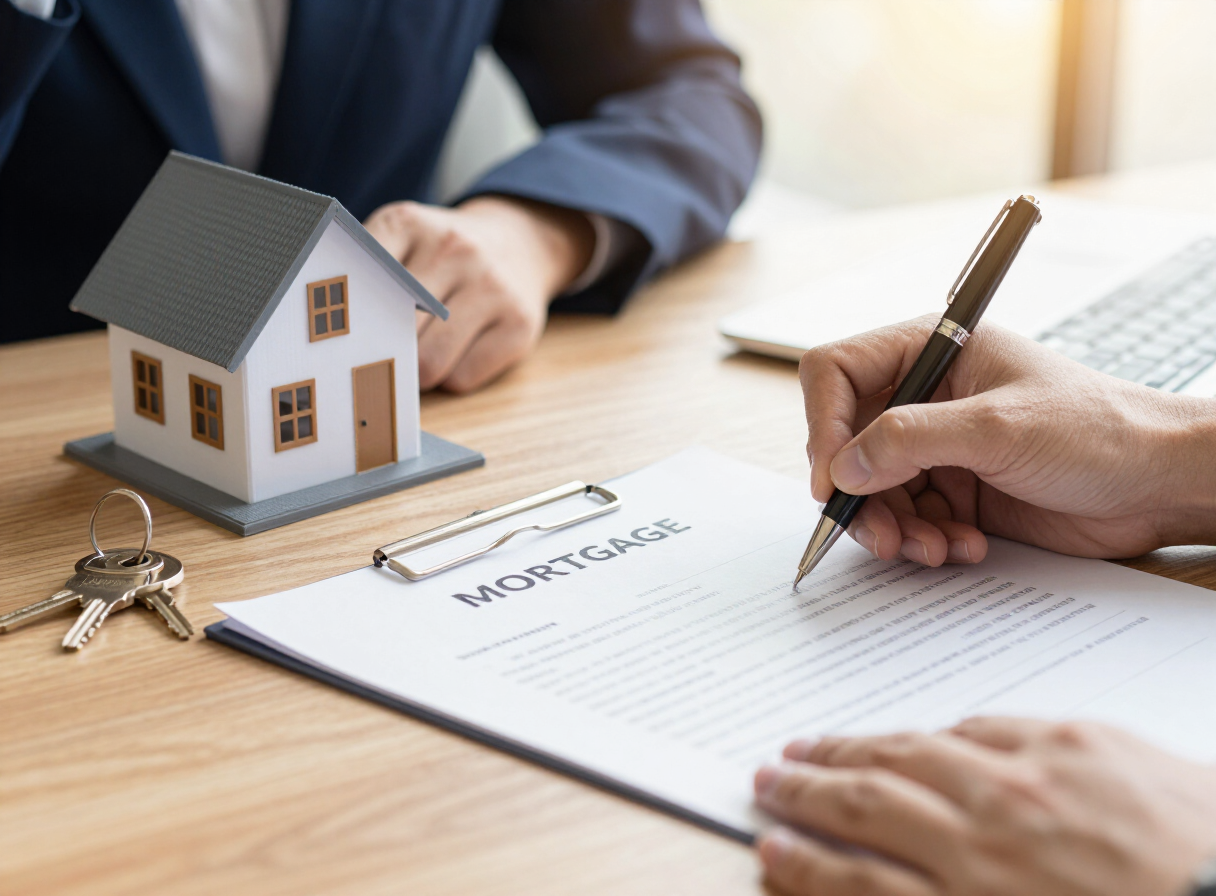
Loan Options & Purchasing Power
Know your number before you tour homes in Greater Houston
Buying a home starts with a simple question: how much can you comfortably borrow? I am Evan Hitch, MBA, a dual-licensed REALTOR and Mortgage Loan Originator who helps you understand your purchasing power, so you shop with confidence. When you are ready to apply, explore loan options through Direct Rate.
Purchasing power
It starts with a simple conversation
Purchasing power is the price range a lender confirms you can comfortably borrow for a home. You do not need a stack of paperwork or a firm move date to learn it. A short call is enough to understand how lenders see your file, what price range makes sense, and what steps, if any, would strengthen your position before you tour homes.
Knowing your number early does two things. It keeps you shopping in a range you can actually close on, and it makes your offers stronger, because sellers in Greater Houston expect a buyer who is ready. The earlier you start, the more options you have.
On the mortgage side, I am licensed statewide: through Direct Rate, I can help buyers anywhere in Texas.

How financing works
The basics, made simple
A mortgage is a loan used to buy a home, paid back over time with interest. You borrow a set amount, make a monthly payment that covers part of the loan plus interest, and own the home outright once it is paid off. Here is what shapes that loan and your monthly payment.
Income and debts
Lenders compare your monthly income to your monthly debts, including the new housing payment, to gauge what you can repay comfortably.
Down payment
The amount you put down affects your loan size, your monthly payment, and whether mortgage insurance is added. More down can mean a lower payment.
Credit profile
Your credit history and score influence the interest rate you qualify for. Even small rate differences change your monthly payment over time.
Loan term and rate
A shorter term means higher monthly payments but less interest overall. Your rate, fixed or adjustable, shapes what you pay every month.
What goes into a monthly payment
Most monthly payments bundle four costs, often called PITI: principal, the amount that pays down the loan; interest, the cost of borrowing; property taxes; and insurance. If your down payment is below a certain threshold, mortgage insurance may be added as well. Knowing all four, not just the loan amount, is what makes your budget real.
Because I am licensed on both the real estate and lending sides, I can walk you through how each piece moves your number, so there are no surprises after you fall in love with a home.
Loan programs, explained
Five common ways to finance a home
There is no single best loan, only the one that fits your situation. Here are the five programs buyers in Greater Houston and across Texas ask me about most, explained simply.
Conventional
Conventional loans are the most common path and a great fit if you have steady income and solid credit. Down payments can start as low as 3 percent for qualified first-time buyers and 5 percent for most buyers, though many buyers put down more. I walk buyers through these when their credit and savings put the best rates within reach, because they often offer the most flexibility once your file is strong.
FHA
FHA loans are backed by the government and built for buyers with smaller down payments or credit that is still growing. You can put as little as 3.5 percent down, which makes them a smart entry point for first-time buyers. I see these open doors for people who thought they had to wait. The trade-off is mortgage insurance that typically stays for the life of the loan.
VA
VA loans are reserved for active-duty service members, veterans, and eligible surviving spouses. They allow no down payment and no ongoing mortgage insurance, which is one of the best benefits in lending. I am proud to help those who served use this hard-earned advantage. Credit requirements also tend to be more forgiving than conventional loans.
USDA
USDA loans help buyers purchase in eligible rural and suburban areas with no down payment. Income limits apply, and the home must sit within a qualifying zone, which covers more of Greater Houston than most people expect. I check eligibility early so we know if it fits your target area. Mortgage insurance is required but usually costs less than conventional.
Jumbo
Jumbo loans cover amounts above the conforming loan limits, so they fit higher-priced homes. They typically require a larger down payment, often 10 to 20 percent, along with stronger credit and reserves. I use these for buyers stepping into luxury or acreage properties. The underwriting is stricter, but the right preparation makes it smooth.
For the programs and rates available right now, use the button below to explore loan options through Direct Rate.
Explore Loan OptionsFrom conversation to keys
Four simple steps
1
Start with a conversation
A quick call or text is all it takes. I learn your goals, your timeline, and where you are in the process, no paperwork required.
2
Learn your purchasing power
I explain how lenders view your income, debts, and down payment so you understand the price range you can shop in with confidence.
3
Get pre-approved
When you are ready, a lender verifies your file and issues a pre-approval letter that strengthens every offer you make.
4
Shop and offer with confidence
Knowing your number turns home tours into focused decisions. You make stronger offers and avoid falling for a home outside your range.
Direct Rate
Ready to see your loan options?
When you are ready to move from conversation to application, I point you to Direct Rate to explore loan options, compare rates, and start the pre-approval process. I am an employee of Direct Rate and work side by side with a full loan team, so I have full visibility into your loan from application to closing. Mortgage services are offered separately through Direct Rate, NMLS ID 2320473, so your real estate search and your financing stay clear and coordinated.
- Compare loan programs and current rates
- Get a pre-approval letter that strengthens offers
- Coordinate your financing with your home search
Frequently asked
Financing questions, answered
Clear, direct answers to the home-financing questions buyers across Texas ask me most, clearly, without the jargon.
What is purchasing power?
Purchasing power is the price range a lender confirms you can comfortably borrow for a home, based on your income, debts, down payment, and current interest rates. Knowing it before you tour homes keeps you shopping in a range you can actually close on, and it makes your offers stronger because sellers see a buyer who is ready.
Do I need to be ready to buy before I talk to Evan about financing?
No. The conversation can happen months before you are ready to make an offer. In fact, the earlier you understand your purchasing power, the more time you have to strengthen your file, adjust your budget, or pay down a balance that moves your number. A simple conversation is the starting point, not a commitment.
What is a pre-approval and why does it matter?
A pre-approval is a lender’s written estimate of how much you can borrow, based on a review of your income, assets, and credit. It is stronger than a basic pre-qualification because a lender has actually verified your information. Sellers in competitive Greater Houston markets expect to see one with your offer.
How much down payment do I need?
It depends on the loan type. FHA requires a minimum of 3.5 percent down. Some conventional programs go as low as 3 percent for qualified first-time buyers, but most conventional buyers put down 5 percent or more. Putting 20 percent down avoids mortgage insurance entirely.
What documents will I eventually need?
Most lenders ask for recent pay stubs, W-2s or tax returns, bank statements, and a photo ID. Self-employed buyers may need two years of business returns and a profit-and-loss statement. You do not need any of this for the first conversation, but gathering them early makes pre-approval faster.
What is the difference between pre-qualification and pre-approval?
A pre-qualification is a quick, informal estimate based on information you share without verification. A pre-approval is stronger because a lender actually verifies your income, assets, and credit before issuing a written loan estimate. Sellers in Greater Houston expect a pre-approval, not a pre-qualification, with your offer.
What credit score do I need to buy a home?
It depends on the loan type. Some programs allow scores in the mid-600s, while conventional loans often start around 620. A higher score usually means a lower interest rate. I can explain where your credit stands and what steps, if any, would help before you apply.
What is mortgage insurance and when is it required?
Mortgage insurance protects the lender if you stop making payments. It is usually required when your down payment is below 20 percent on a conventional loan. Some loan types include it for the life of the loan, while others let you cancel it once you build enough equity.
How long does pre-approval last?
Most pre-approval letters are valid for 60 to 90 days, after which a lender may re-check your credit and update your file. If your search takes longer, I help you refresh it so your offers stay strong.
Can you help me with a loan if I buy outside the Houston area?
Yes. My real estate practice serves Fort Bend County and Greater Houston, and my mortgage lending through Direct Rate is licensed for all of Texas, so I can run your loan wherever in the state you buy.
Client trust
Trusted Across Greater Houston
“He has supported my investment and personal property decisions with clear guidance and steady follow-through. He is someone I trust.”
Muhammad Asad
Not sure where you stand?
A ten-minute conversation can show you your purchasing power and your next step. Call or text (713) 804-8722, or send a message.