

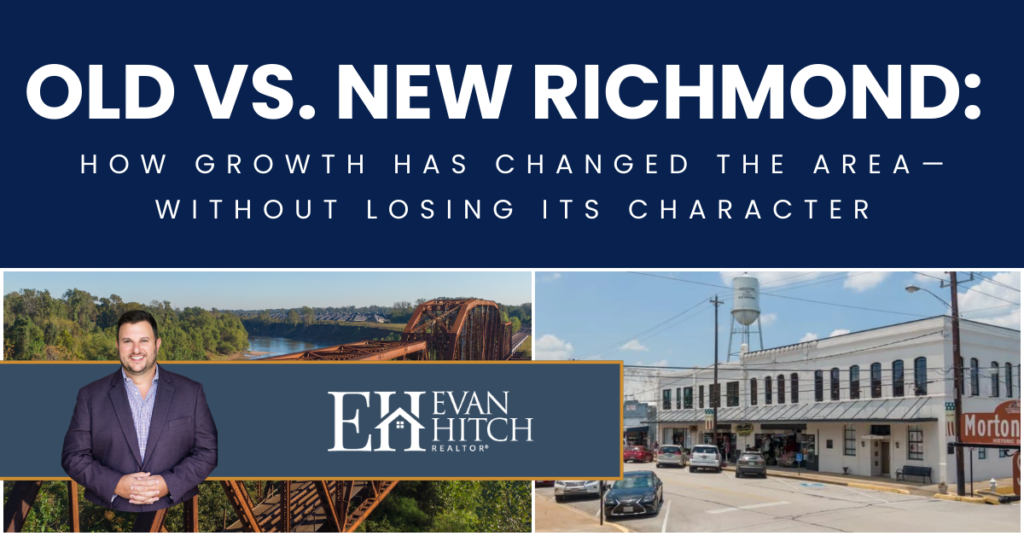
Richmond, Texas has a way of feeling rooted—even as it grows. As the county seat of Fort Bend County and one of the older communities in the region, Richmond’s story is tied to Texas history, the Brazos River, and a downtown that still reflects its early civic identity.
At the same time, anyone who has driven through the area recently can see that Richmond isn’t standing still. New housing, infrastructure, and planning efforts are reshaping the day-to-day experience for residents—while local leaders and community groups work to keep the city’s character front and center. Here’s a look at what’s “old Richmond,” what’s “new Richmond,” and how the two are blending together.
Richmond’s Historic Core: County-Seat Roots That Still Show Up Today
Richmond’s history stretches back to the Republic of Texas era, and the city’s long-standing role as Fort Bend County’s seat helped shape a traditional town center—government buildings, historic streetscapes, and community gathering points that still anchor local identity. Even if you don’t consider yourself a “history person,” you can feel it in the way the downtown area is laid out and how residents talk about the community: Richmond isn’t just a suburb—it’s a place with its own story.
That historic core matters for real estate, too. In many towns, growth pushes the “old center” to the side. In Richmond, the historic downtown continues to be a focal point—something many buyers and long-time residents value because it creates a sense of place you can’t manufacture overnight.
Downtown Revitalization: Preserving the Feel While Improving the Function
One of the biggest “new Richmond” conversations is how downtown evolves without losing what makes it charming. Recent planning coverage highlights efforts aimed at improving the downtown experience—think beautification, walkability, and the possibility of additional housing options that can support local businesses and bring more daily activity to the area.
When cities revitalize responsibly, it can be a win-win: longtime residents see reinvestment and pride of place, while newcomers get a downtown that’s easier to enjoy day-to-day (more comfortable to walk, more inviting to spend time, and better connected). The key is doing it in a way that complements historic character rather than replacing it.
Growth & New Development: More Choices for Today’s Buyers
Beyond the historic center, Richmond’s growth reflects what’s happening across Fort Bend County: demand for housing, changing household needs, and a steady flow of people relocating for jobs, schools, and lifestyle. With that comes new neighborhoods and newer-home options, often designed around what modern buyers request—open floorplans, energy efficiency, community amenities, and access to major routes.
This “new Richmond” expansion can be especially attractive if you want more home for the money, prefer a newer build, or want neighborhood amenities that weren’t standard a few decades ago. It also creates a broader range of housing choices within Richmond—something that helps the city serve first-time buyers, move-up buyers, and even downsizers who still want to stay close to the community.
Economic Development: Planning for Growth (Not Just Reacting to It)
A meaningful sign of healthy change is when a city is intentionally planning—attracting investment, supporting local employers, and thinking long-term about the tax base and quality of life. Richmond’s economic development efforts (as reflected in local reporting and annual updates) point toward a city that’s working to guide growth in a way that’s sustainable.
From a homeowner perspective, that matters. Thoughtful economic development can lead to better-maintained public spaces, more services, and a stronger sense that the community is building for the future—not just growing randomly.
So… Is Richmond Changing? Yes. Is It Losing Its Character? It Doesn’t Have To.
Every growing city has to answer the same question: How do we make room for new neighbors while protecting what made people love this place in the first place? Richmond’s advantage is that its identity is clear. The history is visible. The downtown still matters. And community conversations about revitalization and development show that “growth” and “character” are being discussed together—not separately.
If you’re considering a move, the “right” part of Richmond often comes down to what you value most: proximity to the historic core, newer construction, commute patterns, or the feel of a particular pocket of town. The good news is Richmond increasingly offers multiple ways to live here—without losing the hometown foundation that sets it apart.
Call to Action
Thinking about buying or selling in Richmond, TX (or nearby Katy/Fort Bend County)? I’m Evan Hitch, and I’ll help you understand what’s changing, what it means for your home value, and where you can find the best fit for your goals.
Call/Text: 281-400-0414
Website: https://evanhitch.com